Upcoming Events
March 18-April 4, 2019
Full CogAT for Second Grade for those that meet the criteriaMarch 7, 2019
8:00 AM - 9:00 AM Dr. Seuss Birthday/ Week- 2:30 PM - 3:00 PM PTO Meets
- 3:00 PM - 5:00 PM Kindergarten Round-up
March 14, 2019
8:00 AM - 9:00 AM VIP Science Night/ Book FairMarch 15, 2019
March 19, 2019
8:00 AM - 9:00 AM iREAD- 6:00 PM - 7:30 PM Festival of Learning Fair
March 20, 2019
8:00 AM - 9:00 AM iREAD- 6:00 PM - 7:30 PM Corporation Art Show Gr. 1-8 Reception
March 21, 2019
8:00 AM - 9:00 AM iREAD

Fourth Grade Language Arts

Themes for Westing Game:
* Appearances: People aren't what they appear to be
*Wealth: Wealth can make people act funny and it is a cautionary tale
*Family: There are two types of families: One you are born into and one you choose
*Identity: The characters are establishing who they are and redefining themselves through the game
*Patriotism: This book was written during the Bicentennial and there are many immigrants represented in the story. Mr. Westing is big on American ideals throughout the story
* Lies and Deceit: The characters will lie and use deceit to protect their identities
*Society and Class: The characters status often poses problems
*Language and communication: The reader has to do some close reading for clues and look at the language in the will

Themes for Westing Game:
* Appearances: People aren't what they appear to be
*Wealth: Wealth can make people act funny and it is a cautionary tale
*Family: There are two types of families: One you are born into and one you choose
*Identity: The characters are establishing who they are and redefining themselves through the game
*Patriotism: This book was written during the Bicentennial and there are many immigrants represented in the story. Mr. Westing is big on American ideals throughout the story
* Lies and Deceit: The characters will lie and use deceit to protect their identities
*Society and Class: The characters status often poses problems
*Language and communication: The reader has to do some close reading for clues and look at the language in the will
We discussed each of the assigned Chapters. We began the week by analyzing sentences from the Westing Game. Using our four-level grammar strategy we looked a parts of speech, parts of a sentence, clauses and phrases. We also played Clue! We all had so much fun playing this game together.
Our Book Club focus is trying to piece all of the clues together. We've started to explore how the characters are changing as we unfold more of the story. The children still seem to be grasping at straws for who they think did what, but this is part of the process. I feel like we are still a bit scattered with our clues and how they all fit together. All good mysteries keep you hanging until the big reveal at the end, right?!

Our Book Club focus is trying to piece all of the clues together. We've started to explore how the characters are changing as we unfold more of the story. The children still seem to be grasping at straws for who they think did what, but this is part of the process. I feel like we are still a bit scattered with our clues and how they all fit together. All good mysteries keep you hanging until the big reveal at the end, right?!
The children are to read Chapters 16, 17, 18 by Monday, March 18, 2019. They should also be able to discuss the comprehension questions.
Fourth Grade Math
Math vocabulary:
addend, algorithm, denominator, difference, like-fractions, numerator, sum unlike denominator and unlike fractions
As the children prepare for their musical, there were slight interruptions to our HA time. This was not a problem, as we took a minute to front load the fractional learning to come AND sneak in a bit of pre-algebra. Using magic squares with whole numbers will help us when the curriculum requires us to use magic squares with fractions. The children have been begging me to teach them higher level math like calculus and trig. I told them that while those are noble things to learn--having a basic understanding of algebraic expressions is needed first. So, I taught the kids how to use the distributive property across numbers/variables in algebra. The only hang-up was learning how to multiply positive and negative numbers. Great mathematical thinking going on.
Math vocabulary:
addend, algorithm, denominator, difference, like-fractions, numerator, sum unlike denominator and unlike fractions
As the children prepare for their musical, there were slight interruptions to our HA time. This was not a problem, as we took a minute to front load the fractional learning to come AND sneak in a bit of pre-algebra. Using magic squares with whole numbers will help us when the curriculum requires us to use magic squares with fractions. The children have been begging me to teach them higher level math like calculus and trig. I told them that while those are noble things to learn--having a basic understanding of algebraic expressions is needed first. So, I taught the kids how to use the distributive property across numbers/variables in algebra. The only hang-up was learning how to multiply positive and negative numbers. Great mathematical thinking going on.
 |
| In case you were wondering--the picture above is NOT me! 😁 |
On Thursday we worked on our magic squares with fractions and then we moved on to our magic triangles. Here are the worksheets we completed:


Second Grade Language Arts
Themes in The Tale of Despereaux:
Light vs. Dark
Individuality/Differences
Taking Risks
Making the impossible...possible
We began our HA language lesson connections in our lives. The boys were able to tell me people they felt connected to. They then completed a Venn diagram where they compared and contrasted two of these connections.

We also began learning the Socratic Seminar Method for conducting our Book Clubs. I shared with the boys the rubric for the Socratic Seminar and we looked at the exemplary box and how that is what we WANT to achieve and that we are probably more in the beginning or developing stage. This is hard for HA kids to admit but also a very important part of their emotional development. Often learning new things is frustrating and hard and we do start at the very beginning. Next week we will employ more Socratic methods and "act" out a seminar based on one chapter that they have read in The Tale of Despereaux. I am anxious to see these skills develop as we take time to practice.
Themes in The Tale of Despereaux:
Light vs. Dark
Individuality/Differences
Taking Risks
Making the impossible...possible
 |
| "...for those who do not conform" |

On Wednesday we began our discussion about the "Art of Persuasion". Next week, the boys will be writing a persuasive passage based on trying to persuade us of something. We talked about the different ways of making a persuasive argument-- especially in advertising. We talked about using bandwagon, testimonials, name calling (not recommended), repetition and glittering generalities. They were able to give me many examples where they used straight up repetition to persuade YOU to buy them something or let them do something. LOL! I've been there so many times, so I feel you all.
The boys will be using the Hamburger Method for writing their persuasive paper. I told them they would base their arguments on facts and data and not the advertising techniques found in popular culture. Looking forward.....

Please have the children read Chapters 11,12,13,14,15 by Monday, March 18 , 2019....I would like to finish Book One up to page 81 by Spring Break. We can start Book Two when we come back. I don't want anyone to feel stress over this so we will get through some of it in class.
The boys will be using the Hamburger Method for writing their persuasive paper. I told them they would base their arguments on facts and data and not the advertising techniques found in popular culture. Looking forward.....

Please have the children read Chapters 11,12,13,14,15 by Monday, March 18 , 2019....I would like to finish Book One up to page 81 by Spring Break. We can start Book Two when we come back. I don't want anyone to feel stress over this so we will get through some of it in class.
Second Grade Math
So, I couldn't find my small tent--no surprise and I don't even know how small it really is--so I didn't bring it in. It would be my luck that it would be bigger than I thought and like a fire hazard or something!!!
However, I did bring in sheets and a pole and we attempted to build a tent-like structure over the 4x8 square foot area we taped on the ground. While this doesn't exactly relate to the curriculum per se, it is providing us more visual clues to understand the math. For instance, if they can "see" how big the area inside the tent is--we can use that "picture" to help them determine the area mathematically. Using models and graph paper are great problem solving strategies. And, it is really fun!
 |
| I mean could they be any cuter??! |

Third Grade Language Arts
Theme: Interactions
Themes in Black Beauty
*The ethical and humane treatment of horses/animals
*Coming of Age: Trials will test characters and these trials will lead to maturation
*Lifelong Friendships: Black Beauty spans birth through old age and two horses remain friends for the long haul.
*Rewards of Doing Good: When a person chooses to do something good, it will be rewarded

We are beginning to scratch the surface of the Socratic Seminar Method. This week started with Listening. A big part of this method of learning involves being a good listener and to listen for information with compassion. We listened to the story, Interrupting Chicken by David Ezra Stein.
Then the girls got into pairs and shared scenarios where they had to listen to what the other person was saying. Not only did they have to listen, they had to respond to the speaker in positive ways; like making eye contact, clarifying what the speaker said and then reflecting the speaker's feeling. Each girl got to be the speak and the listener.
The Socratic Method helps the student gain a deeper understanding of the novel through student run discussions. More of this to come!


On Tuesday, we talked more about the details of Socratic Seminars. I shared with them who Socrates was and how as a teacher he conducted his classes. We looked at a rubric and discussed what an exemplary book club discussion would look and feel like if they were running it. I feel like these girls are definitely ready to run these deeper level discussions.

Homework: The girls need to read Chapters 16, 17, 18, 19, 20 done by: Monday, March 18, 2019.
Theme: Interactions
Themes in Black Beauty
*The ethical and humane treatment of horses/animals
*Coming of Age: Trials will test characters and these trials will lead to maturation
*Lifelong Friendships: Black Beauty spans birth through old age and two horses remain friends for the long haul.
*Rewards of Doing Good: When a person chooses to do something good, it will be rewarded
We are beginning to scratch the surface of the Socratic Seminar Method. This week started with Listening. A big part of this method of learning involves being a good listener and to listen for information with compassion. We listened to the story, Interrupting Chicken by David Ezra Stein.
Then the girls got into pairs and shared scenarios where they had to listen to what the other person was saying. Not only did they have to listen, they had to respond to the speaker in positive ways; like making eye contact, clarifying what the speaker said and then reflecting the speaker's feeling. Each girl got to be the speak and the listener.
The Socratic Method helps the student gain a deeper understanding of the novel through student run discussions. More of this to come!


On Tuesday, we talked more about the details of Socratic Seminars. I shared with them who Socrates was and how as a teacher he conducted his classes. We looked at a rubric and discussed what an exemplary book club discussion would look and feel like if they were running it. I feel like these girls are definitely ready to run these deeper level discussions.

Homework: The girls need to read Chapters 16, 17, 18, 19, 20 done by: Monday, March 18, 2019.
Third Grade Math
Math vocabulary
Area
Our Think Deeply this week asks the kids to reflect on the work they did after tracing their bodies and estimating and counting the area of that irregular shape. We talked about the strategies they used to measure the area such as:
1. partitioning large areas and multiplying
2. Counting partial squares by adding pieces together.
The children have been begging me to teach them higher math. So, I took some time to teach them the distributive method used in algebraic expression. While our expressions didn't have variables, that will be the next step. They will need to know the distributive property to be able to do the next lesson in our curriculum. In the next lessons, the children will explore how to break apart or decompose an irregular shape into rectangular shapes, find the area and then combine those areas.


We also spend time working a page from the Perplexor books I brought in.
Have you seen these wonderful puzzle books?? Your children love them! If you are interested check out the link below:

They can be purchased here:
https://www.mindware.orientaltrading.com/perplexors-basic-level-a2-90445.fltr
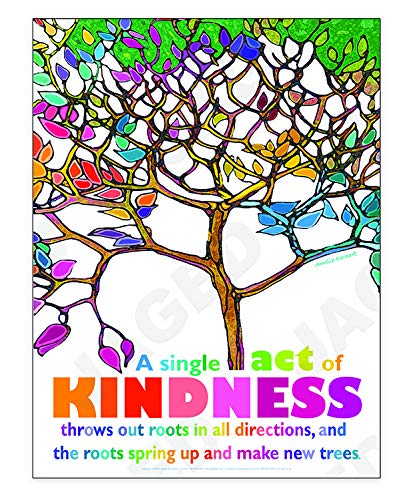
This week, I have spent time in each High Ability class talking about how special each one of them is and how they will probably be in classes together throughout their schooling.
We talked about how they need to practice now--listening to each other, and building each other up. High Ability kids NEED other High Ability kids for many reasons. We broached such subjects as meeting high expectations for ourselves and those placed on us by others. Many of the kids spoke freely about how they are still kids who are LEARNING not knowing everything--yet or EVER!
You should be so proud of your children. They work really hard in High Ability! They are growing and maturing in so many ways and they are being really kind to each other and hopefully themselves.
1. partitioning large areas and multiplying
2. Counting partial squares by adding pieces together.
The children have been begging me to teach them higher math. So, I took some time to teach them the distributive method used in algebraic expression. While our expressions didn't have variables, that will be the next step. They will need to know the distributive property to be able to do the next lesson in our curriculum. In the next lessons, the children will explore how to break apart or decompose an irregular shape into rectangular shapes, find the area and then combine those areas.


We also spend time working a page from the Perplexor books I brought in.
Have you seen these wonderful puzzle books?? Your children love them! If you are interested check out the link below:
They can be purchased here:
https://www.mindware.orientaltrading.com/perplexors-basic-level-a2-90445.fltr
This week, I have spent time in each High Ability class talking about how special each one of them is and how they will probably be in classes together throughout their schooling.
We talked about how they need to practice now--listening to each other, and building each other up. High Ability kids NEED other High Ability kids for many reasons. We broached such subjects as meeting high expectations for ourselves and those placed on us by others. Many of the kids spoke freely about how they are still kids who are LEARNING not knowing everything--yet or EVER!
You should be so proud of your children. They work really hard in High Ability! They are growing and maturing in so many ways and they are being really kind to each other and hopefully themselves.


No comments:
Post a Comment
Note: Only a member of this blog may post a comment.